
How to Pack a Storage Unit Efficiently: 10 Tips for Movers
How to Pack a Storage Unit Efficiently: 10 Tips for Movers
—
August 25th, 2026
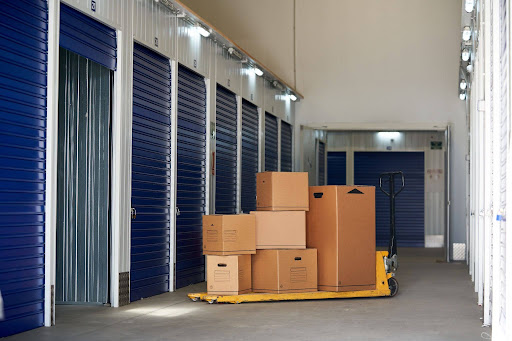
Knowing how to pack a storage unit efficiently is the difference between fitting your whole move in one unit and paying for a second one you did not need.
The problem is that most people pack a storage unit the same way they load a car for a road trip, which is whatever fits next goes on top of whatever is already there. That approach works fine for a weekend trip. It does not work for a unit you will be visiting for weeks or months during a move.
The tips below come from managing move-ins every week and watching what separates the tenants who breeze through a move from the ones who end up unloading half their unit every time they need to find something.
Follow these and you will use less space, protect your belongings better, and actually reach what you need without the wrestling match.
10 tips on how to pack a storage unit efficiently
1. Start with the right size unit
Efficient packing starts before you load the first box. If your unit is too small, no amount of clever stacking will make it work, and if it is too big, you will spread out and waste money on empty space.
Match the unit to your load using our size guide, which breaks down what fits in each common size. When in doubt, size up one step. The extra breathing room lets you leave a center aisle and organize properly, which pays back every time you visit.
2. Make a rough layout plan before you load anything
Do not just start carrying boxes into the unit and setting them down. Walk into the empty space first and picture where each category of items will go.
The rough plan should have three zones:
- back wall for anything you will not need until the end of your storage stay
- middle section for medium-priority items
- front area for anything you might need to access during the rental
Ten minutes of planning here saves hours of rearranging later. It also keeps you from burying a box you will need in week two under a couch that came off the truck first.
3. Use uniform, sturdy boxes
Mismatched boxes are the biggest reason storage units end up looking like a landslide waiting to happen.
Standard moving boxes in a few consistent sizes stack cleanly, hold weight without collapsing, and let you build stable columns instead of leaning towers. Grocery store boxes, banana boxes, and random cardboard from the recycling bin do the opposite.
They collapse under weight, wobble when stacked, and force you to leave gaps that eat up your usable space.Invest in real moving boxes for anything you plan to stack, and save the odd containers for lightweight items that will sit on top.
4. Fill every box completely
An underfilled box is a crushed box the moment you stack anything on top of it. Even sturdy boxes need to be packed full to hold their shape under load.
If you run out of items to fill a box, add packing paper, towels, blankets, or clothing to take up the empty space. This does two useful things at once. It keeps the box structurally sound, and it uses items you were going to store anyway as free packing material.
Overfilled boxes cause their own problems, so aim for full but not bulging. The lid should close flat without straining the tape.
5. Disassemble large furniture
Learning how to pack a storage unit efficiently means treating furniture as the biggest space-saver in your inventory.
Take apart bed frames, table legs, and any modular furniture that comes apart cleanly. A queen bed frame that occupies six feet of floor space assembled takes up a fraction of that when broken down and leaned against a wall. The same is true for dining tables, desks, and most shelving units.
Keep all screws, brackets, and small hardware in a labeled bag taped to the largest piece of the disassembled furniture. Nothing wastes time like reassembling a bed and realizing the hardware is in a box you already stacked at the back of the unit.
6. Load heaviest items first and along the walls
Weight goes on the bottom, always, and heavy furniture goes against the walls.
Appliances, dressers, sofas, and boxes of books form the foundation of your unit. Load these first along the perimeter, working your way from the back wall forward. This gives you a stable base to stack lighter items on top, and it keeps the center of the unit open for the next phase.
Light, fragile items go on top. Never stack heavy boxes on top of a mattress, a couch, or anything with a soft surface, since the weight will damage both the item underneath and whatever you stacked.
7. Use vertical space, not just floor space
Most people pack a storage unit two or three feet high and then start a new floor row. That approach wastes half the space you are paying for.
Standard Foothill Mini Storage units have 8-foot ceilings, which means you have close to twice as much vertical space as you have floor coverage. Stack boxes up the walls, use tall furniture like wardrobes and bookshelves as vertical storage themselves, and rest lighter items on top of appliances instead of alongside them.
The rule is simple. If there is empty air above a stack and you have not hit the ceiling, you have not used the space efficiently.
8. Leave a center aisle
The single most useful thing you can do for future visits is leave a walking path down the middle of the unit.
Two feet of open aisle down the center means you can reach items along both walls without pulling apart your carefully built stacks. Without an aisle, retrieving one box from the back requires unloading everything in front of it, which usually turns into a two-hour project you did not plan for.
The aisle feels like wasted space when you are loading, but it pays back on the first visit. If you are storing during a multi-week or multi-month move, it becomes the most valuable two feet in the unit.
9. Label boxes on multiple sides
A box labeled only on the top is useless the moment you stack another box on top of it.
Label every box on at least two sides, ideally three, so you can read the contents no matter how the box ends up positioned in the stack. Write the room the contents belong to and a short list of the main items, not just "kitchen stuff." Specificity matters when you are looking for one specific item weeks later.
Color-coded tape or stickers work well for anyone visual. A blue dot for kitchen, red for bedroom, green for office, and so on lets you scan the unit and find your target category in seconds.
10. Protect against moisture, dust, and damage
Even a clean, secure unit exposes belongings to some dust, temperature variation, and the occasional bump from moving items in and out.
Cover mattresses and upholstered furniture with proper mattress bags or old sheets. Wrap wood furniture in moving blankets, not plastic, since plastic can trap moisture against the wood and cause damage over time. Stand mirrors and framed art upright between mattresses or other flat items, never flat on the floor where anything set on top can crack them.
For anything sensitive, keep it well off the concrete floor by resting boxes on a pallet, a plastic sheet, or a piece of scrap plywood. This is a small step that prevents the exact damage most people worry about when they first rent a storage unit.
Bonus tip: think about what you will need first
The last principle to remember about how to pack a storage unit efficiently is that access matters as much as space.
Before you load anything, make a short mental list of the items you might need to grab in the first month. Seasonal clothing, kitchen essentials for a temporary rental, kids' school supplies, or work documents all belong near the front of the unit or in a clearly marked box you can reach without unloading everything.
For movers holding a full household in storage during a longer transition, this is often the difference between a smooth storage stay and a frustrating one.
Final thoughts
Learning how to pack a storage unit efficiently comes down to a few clear principles. Plan before you load, use uniform boxes, disassemble large furniture, load heavy items first along the walls, use your vertical space, and leave an aisle so you can actually reach what you stored.
Follow those and a smaller unit will handle more than you think, your belongings will come out of storage the same way they went in, and you will not spend a Saturday afternoon unloading half your unit to find one box of kitchen supplies.
If you are getting ready for a move and need a clean, secure, drive-up unit with the space to pack efficiently, call or stop by Foothill Mini Storage today. Our on-site team can walk you through the right size for your load and reserve your unit before availability tightens up.
Blog
Categories